
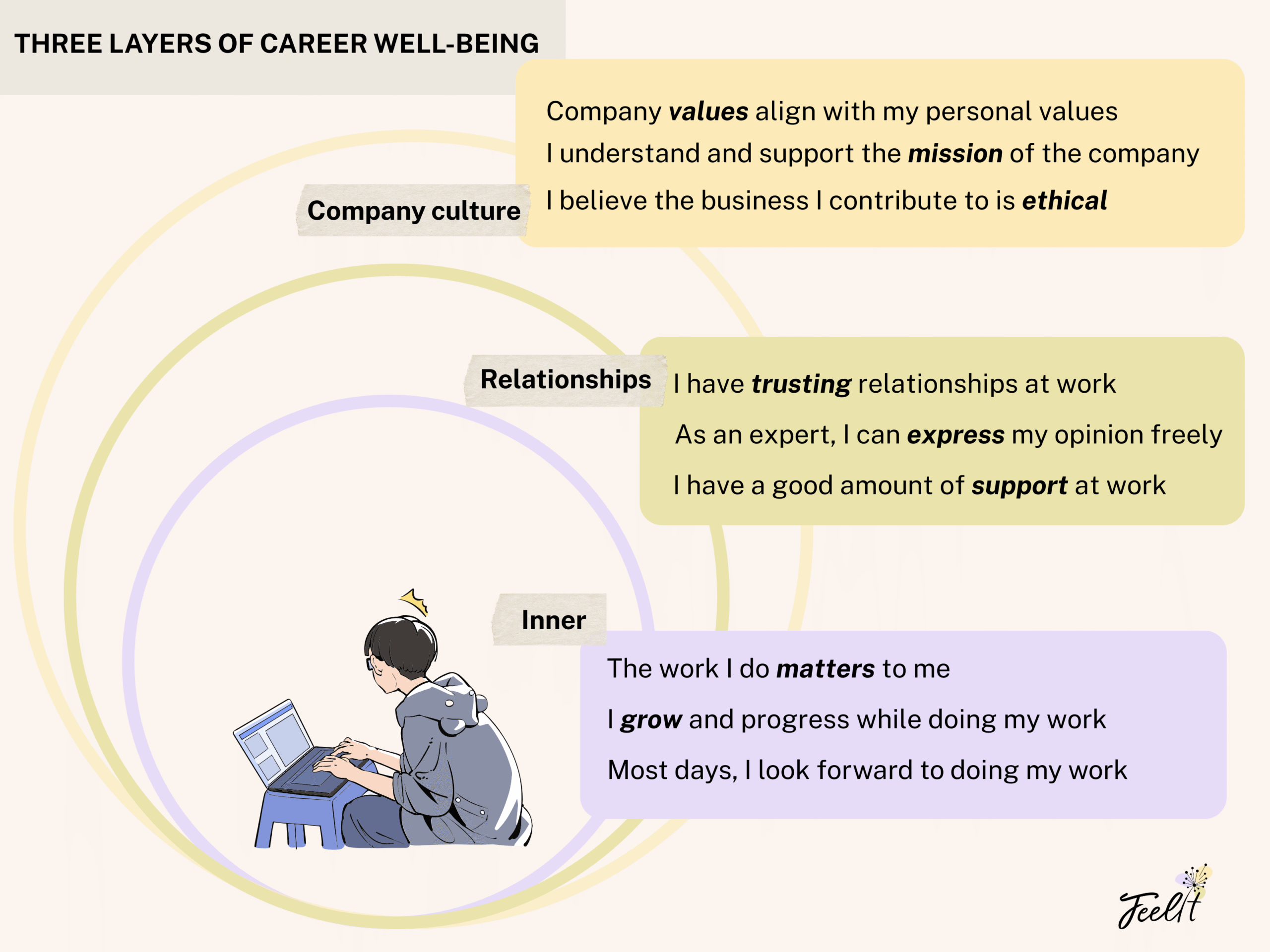
People come to therapy wanting to understand themselves better. When they do, clarity often appears across all areas of life, including career. As a Gestalt psychotherapist, I support this exploration through three perspectives.
The first perspective is the inward one – helping a client to tune in to their own experience. We explore bodily sensations and responses, energy levels, emotions, and narratives. Many of us live for years without pausing to notice these things, yet they guide every decision we make.
The same kind of inner attention is equally important in our work life. Workplaces formalise such check-ins through manager 1-on-1s and performance reviews. During those rituals it is important to be honest with yourself – does the work I do meet my current needs? Do I get the support that I need? We constantly change as humans, and such reflections might help align personal growth to our career progression.
The second perspective is the relational one. In the therapy, it’s a relationship between me and my client. How the client engages with me often mirrors how they relate to people outside the therapy room. When the trust is established, I start softly bringing my experience to the client. For example, I might mirror back to the client the fact that they do not accept compliments. One rarely can get honest feedback from daily interactions, therapeutic setting in this way equips clients with having more choices (now knowing how what I do influences the other, I might want to behave differently).
Letting go of the expectation to navigate every work relationship perfectly can open space for a more realistic, compassionate view of how connection at work actually happens. Authentic collaboration at work becomes possible only when there is enough psychological safety and a sense of personal grounding.
The third perspective looks outward, at the whole environment a person is part of. In the therapy, we explore cultural, historical, social influences, as well as family dynamics that have defined who we are. Each of us is shaped by our environment. Much of this is absorbed non-verbally, and we adapt without even realizing it.
The same should be looked at from a career perspective. The pace and agility of the IT industry is far from the strict, methodical world of aircraft engineering. Thus the expectations will differ. IT layoffs, expectations to grow super fast, high demands are common for the IT industry, and they do influence employees. By seeing these invisible pressures, one can stop feeling as a failure, and start looking for ways to balance out the stress.
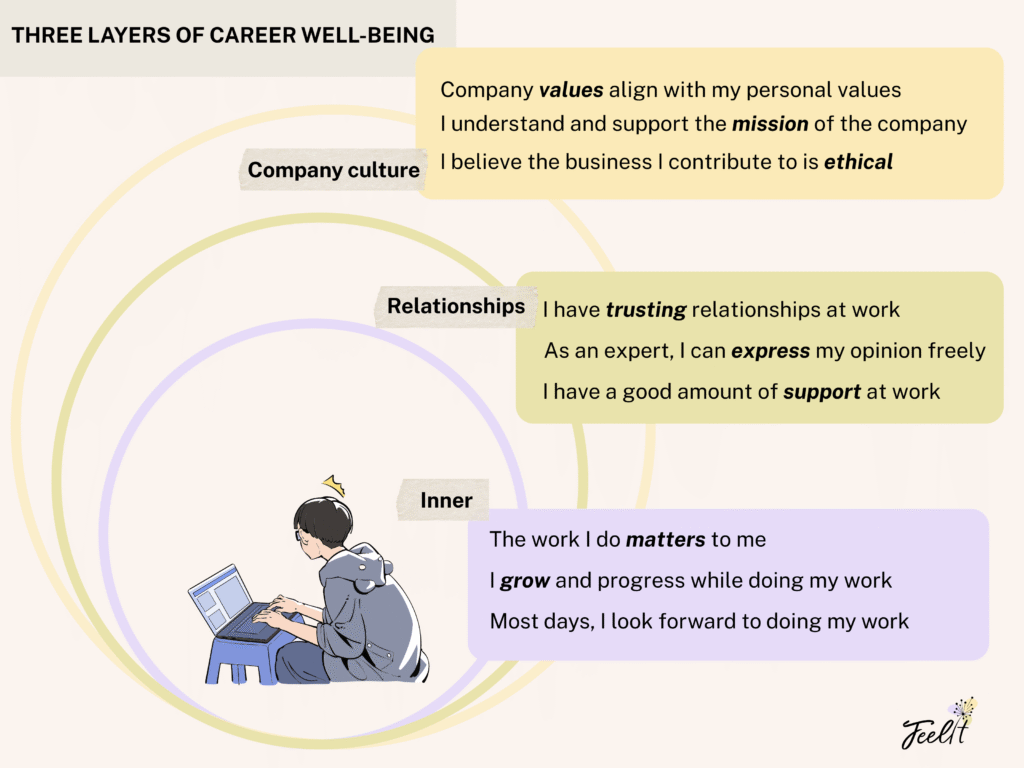
When these three perspectives come together – the inner experience, the relationships, and the outer wider cultures – people gain a fuller picture of themselves. They begin to understand not only what they want from life but also what kind of environments support them, how they collaborate with others, and what choices truly fit who they are becoming. This broader awareness naturally shapes their career path: the more aligned they are with themselves, the more grounded, intentional, and authentic their professional life becomes.
Leave a Reply